
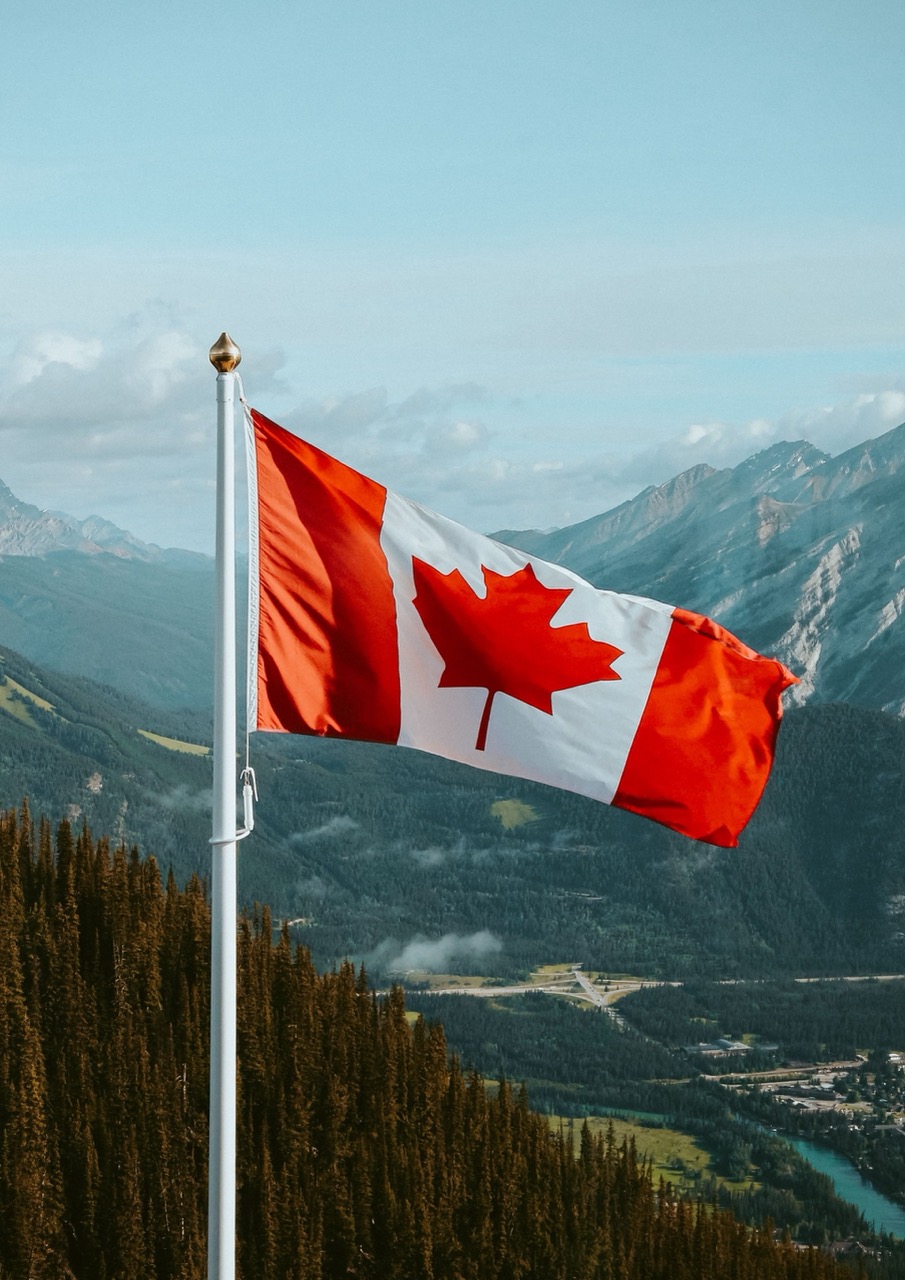
It’s been pretty fucking uncomfortable to be a Canadian entrepreneur lately. Double D keeps hitting us with tariffs and verbally messing with our markets. If you believe any of this nonsense is a net positive for either of our economies, you are not gonna like what I have to say.
I was watching this video with Scott Galloway on the Piers Morgan show, where he is talking to Piers and Kevin O’Dear-ee about how the U.S. smacked their most loyal ally in the face. I don’t want this to be a political blog, but politics is finding a way to dick around in every convo somehow. Galloway made the point that America has inadvertently increased Canadian pride. Heck ya, there is no doubt ABOUT that. I think we can take it one step further though and build on this momentum by really solidifying our Canadian brand.
For decades, we really haven’t had to think that hard about what the Canadian brand means outside of Canada. We had the largest economy in the world sitting right beside us, an enormous peaceful border between us and supply chains that became so interconnected that selling to the United States was almost the default setting for Canadian business. We became very good at digging things out of the ground, cutting things down, growing things, making things and sending them south. There was enormous economic logic to that relationship, and despite the current political bullshit, there still is. But I also think it allowed us to become a little complacent about how we value ourselves. We were simply logistically convenient but who we are, what our brand is, was of little value.
I sometimes describe it in a way that is intentionally a little ridiculous: Canada has been operating like the really good dollar store beside the United States. We have incredible resources, incredible talent, stable institutions, technology, energy, minerals, agriculture, manufacturing expertise and one of the most geographically remarkable countries on the planet, but we have spent generations feeding a huge portion of that value into somebody else’s economy. When your biggest customer is right beside you and they buy almost everything you are willing to sell them, you don’t necessarily have to work as hard at explaining why your stuff is special. You compete with proximity, reliability, price and efficiency. Those are great things to compete with, until your customer starts treating your reliability like dependency and your proximity like leverage. Or declaring that we are taking advantage of them… Are we? We spend approximately the same amount on their stuff as they do on ours and they are 10 times our size. Anyways, it’s bananas, and I digress.
If Canada really is entering an era where we need to diversify away from the United States, then I don’t think our strategy can simply be finding other countries willing to buy the same stuff. We should be asking a bigger question about what it means to buy Canadian in the first place. What does Canada represent to somebody in Germany, Japan, India, the UAE or Brazil? What does our name add to a product? What makes somebody want to visit here instead of somewhere else? What makes an international company want to invest here? What makes a talented person want to immigrate here, build a company here and eventually call this place home? These are economic questions, but they are also branding questions, and I think Canada has historically been a little lazy about answering them.
Our international identity is certainly positive, which is a great place to start. We are nice. We are polite. We have hockey, maple syrup, bacon, Mounties, mountains, lakes, trees and a half-decent flag. We are generally seen as safe, stable and trustworthy. I am not suggesting we throw any of that away. I just think it is an incredibly shallow description of an incredibly deep place. If we are entering a period where Canada has to introduce itself to the world again, I think we have an opportunity to tell a much more interesting story, and this is where my work in Indigenous environmental design has really started changing the way I think about Canadian identity. I didn’t want to make this blog about me but here we are.
Quick history lesson: Canada became a country in 1867, but this place did not begin in 1867. That sounds ridiculously obvious when you say it out loud, yet so much of the way we present Canadian history still treats Confederation as some kind of starting line. People had already been living, travelling, trading, governing, negotiating, creating art, raising families and passing knowledge between generations on these lands for thousands of years. Places already had names. Rivers were highways. Nations had territories, governments, economies, diplomatic relationships and agreements with one another. Ever hear of a wampum belt? No? Well, look it up. There were systems of knowledge about plants, animals, water, seasons and the land that developed over countless generations of observation. Canada is a relatively young political country sitting on top of an incredibly old and deep human story, and somehow we have never really figured out how to make that one of the defining characteristics of our national identity.
Quick history lesson, part 2: The word Canada seems to have been derived from the Huron-Iroquoian word kanata. A well-known European shows up here, asks for directions and hears the word “kanata.” The Indigenous people are directing him toward a village. Kanata literally means “village” or “settlement.” But Jacques Cartier starts using the word to describe not just the village, but the surrounding territory. And eventually that word becomes the name of the entire fucking country. So, unbeknownst to pretty much everyone who has said the word Canada since, we essentially named the second-largest country on Earth “the village.” Can we just sit with that for a second? country in the world and we are called the village. To me, that juxtaposition, is beautiful.
The second-largest country on Earth, one of the most resource-rich pieces of land on the planet, and we called it the village. There is something so profoundly Canadian about that.
Let’s get back to the opportunity. First, I want to be clear, I am not suggesting that we package Indigenous culture up and use it to sell more lumber. Indigenous people have already had enough of our identities borrowed, romanticized and commercialized while we were excluded from the economic benefits. What I am arguing for is almost the opposite. Indigenous people should have a much larger role in defining the Canadian story because we are not simply characters within that story. We are among its historians. Our Elders and Knowledge Keepers carry histories of these lands that predate the institutions now responsible for interpreting them. Our communities hold knowledge about the water, animals, medicines, trade routes, landscapes and relationships that shaped these places long before anyone drew the current borders around them.
For much of Canadian history, Indigenous culture has functioned almost like a mascot for the country. We put Indigenous imagery on things because it feels Canadian while simultaneously pushing actual Indigenous people to the margins of the Canadian story. That contradiction has always bothered me. If our cultures are important enough to symbolize Canada, then Indigenous people should be important enough to help define Canada. We should be participating as artists, designers, historians, architects, entrepreneurs, Knowledge Keepers, storytellers and decision-makers. More importantly, Indigenous communities should share in the economic value created when their cultures and histories contribute to the identity of a destination, institution or product.
That distinction is important because tourism is fundamentally about difference. We travel because we want to experience somewhere other than where we came from, yet somehow we have spent the last several decades making an awful lot of places look exactly the fucking same. Hotels look like other hotels. Airports look like other airports. Condos look like other condos. Restaurants copy the restaurant that got popular in another city three years earlier. Then we spend millions of dollars marketing destinations and trying to convince people that they are unique. Indigenous environmental design gives Canada an opportunity to work in the opposite direction by digging deeper into what is already specific and authentic about each place.
That does not mean developing some standardized Canadian Indigenous aesthetic and spreading it across the country. That would defeat the entire purpose. Anishinaabe territory should not feel like Mi’kmaq territory. Coast Salish design should not tell the same story as Cree design, and Inuit Nunangat should reflect its own histories, landscapes and traditions. Even neighbouring communities can carry different stories and relationships with the same landscape. The opportunity is not to make Canada look generically Indigenous. It is to allow the Indigenous history of individual places to make those places more distinct. Done properly, Indigenous environmental design does not make everywhere feel the same. It makes everywhere feel more like itself.
That is obviously a cultural opportunity, but I also think it is an economic one, and I don’t think we should be afraid to say that. Anyone who works in branding understands that commodities compete largely on price while brands compete on meaning. Meaning is where margin starts to appear. Italy has spent generations attaching enormous value to the idea of Italian design. Switzerland means something when it is stamped on a watch. Japanese craftsmanship carries an expectation. French luxury has economic value before you even know the individual company making the product. None of those countries invented those associations through a clever ad campaign. They developed them over generations by connecting products, culture, craftsmanship, history and place.
So what could Canadian mean? I think that is a fascinating question for us to be asking right now. Canadian could mean exceptional quality, responsible natural resources, environmental stewardship, Indigenous knowledge, innovation, trust, multicultural creativity, northern resilience and a much more sophisticated relationship with nature than simply putting a pine tree on the package. Those associations could influence tourism, architecture, food, fashion, manufacturing, technology, natural resources and the countless other things we want to sell to the world. If we are going to diversify our economy, we should not simply be looking for replacement buyers. We should be asking how we increase the perceived and actual value of what Canada produces.
That is where my dollar-store analogy comes back into it. If we have spent generations selling enormous quantities to one convenient customer, maybe part of this uncomfortable moment is an opportunity to rethink the price tag. In branding, you can take two products made from similar materials and sell one for considerably more because people understand where it came from, who made it, what it represents and why it matters. Provenance has value. Craftsmanship has value. Design has value. Story has value. Canada possesses all of those things, but we have not always been particularly good at packaging them together into a coherent idea of what Canadian value means.
I think Indigenous participation can be an important part of changing that, provided Indigenous people are authors and economic participants rather than source material. Our concepts of stewardship, place, responsibility, community and long-term thinking can influence how Canadian things are actually built, not just how they are marketed. There is something particularly relevant about those ideas at a moment when Canada is simultaneously talking about natural-resource development, climate change, housing, immigration, infrastructure, trade and economic sovereignty. We are trying to figure out how to create more wealth from this country while also figuring out how to live responsibly within it. Indigenous people have been thinking about the relationship between those two things for a very long time.
I also think this has implications for how we welcome new Canadians. Someone arriving here from India, Trinidad, Nigeria, China, Ukraine, Syria or anywhere else should absolutely bring their culture with them. That is one of the things I love about Canada. But I also think becoming Canadian can involve developing a relationship with the place you have chosen to call home. Learning whose territory you live on, understanding something about the water beside you, knowing the older history of your community and recognizing the Nations who have cared for that place for generations does not compete with multiculturalism. I think it actually gives multiculturalism a stronger foundation. We can come from a thousand different places and still develop a shared relationship with the place where we now live.
Maybe that is ultimately what I mean when I talk about strengthening the Canadian brand. I am not talking about creating a new logo for Canada or coming up with a better tourism slogan. I am talking about developing a stronger collective understanding of what this place means and then allowing that understanding to influence what we build, what we sell and how we introduce ourselves to the rest of the world. The strongest brands are not inventions. They are usually clear expressions of something that was already true, and Canada already has an extraordinary amount to work with.
The United States has spent generations telling the world exactly who it thinks it is, sometimes brilliantly and sometimes obnoxiously. Canada has always been a little quieter, and maybe we could afford to be because our largest customer was sitting right beside us. That relationship suddenly feels a lot less predictable, and while I would certainly prefer a little less chaos, I think there is an opportunity buried inside it. We are being forced to ask who we are when we are not simply America’s neighbour, what makes our products valuable, what makes our destinations worth travelling to and what somebody should understand when they see the words “Made in Canada.”
I don’t think Indigenous culture is the entire answer to those questions. Canada is Indigenous, Francophone, Anglophone and increasingly shaped by people whose families come from every corner of the world. That complexity is one of our greatest strengths. But there is a foundation underneath all of it, and that foundation is the land. Indigenous peoples have been naming, understanding, navigating and telling stories about that land for thousands of years. Recognizing that history does not make modern Canada less multicultural or less forward-looking. It gives everything we are building today deeper roots.
Maybe Canada does not need to invent a more interesting identity at all. Maybe we need to stop acting like our story started 159 years ago and begin building a modern Canadian identity that acknowledges the thousands of years that came before it. If we can do that while giving Indigenous people a legitimate role in telling that story and a meaningful share in the economic opportunities it creates, I think we end up with something that is good for Indigenous communities, good for tourism, good for Canadian businesses and good for the country as a whole.
And if the current shitshow with our neighbours to the south is what finally pushes us to figure out what Canada is worth, maybe something useful can come out of all this after all.
.webp)