
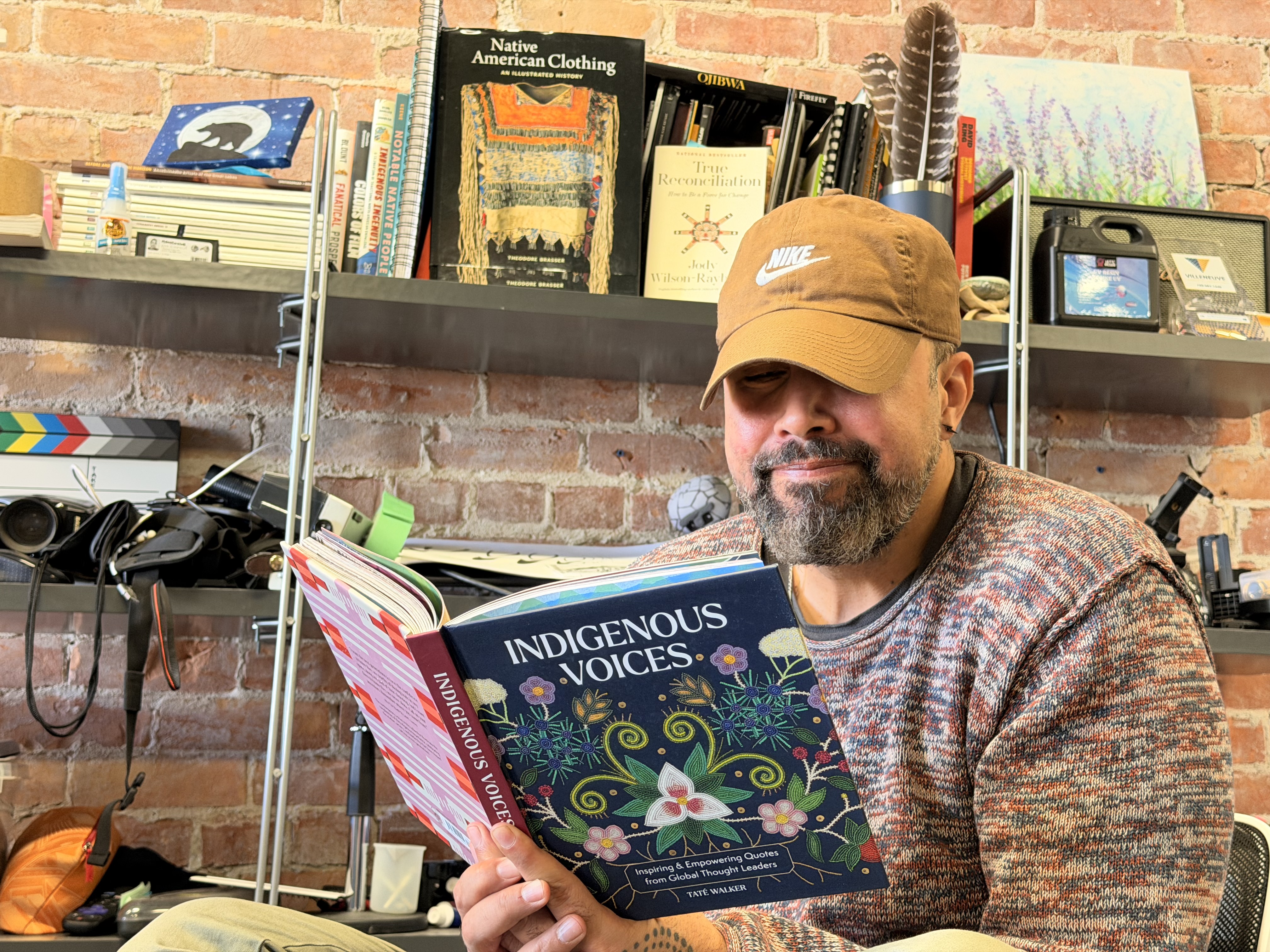
There is a profound silence where Indigenous history and identity should be. For a long time, that silence felt overwhelming. There were moments where I hesitated to step into the light of learning because the weight of "not knowing enough" felt like a disqualification.
But identity isn’t a destination you reach; it’s a path you walk. As Leland Bell beautifully articulated:
"Everything is a circle. We are all related. We are all part of the whole. The journey is about finding your place within that circle."
I’ve made the decision to stop waiting for permission. I am listening to Elders, Knowledge Keepers, and youth. I am staying open, and I am bringing every ounce of that evolving understanding into the work.
Indigenous Design is Not a Style
One of the most persistent misconceptions is that Indigenous design is a "look" a specific pattern, a palette of earth tones, or a graphic element applied at the eleventh hour.
It is not a veneer. It is a philosophy. As the legendary Daphne Odjig once said:
"I am not a traditionalist. I am an artist who happens to be an Indian. My work is a reflection of my soul, not a costume."
Indigenous design can be traditional, modern, or a radical blend of global influences. What defines it isn't the aesthetic; it’s the intention. It’s a way of thinking that prioritizes relationship and reciprocity over mere decoration.
Branding as Lived Experience
In the corporate world, branding is often reduced to logos and hex codes. But at Skystory Creative, we believe branding is a heartbeat. It’s about creating a resonance that people feel in their bones. We help organizations move past the "visual mask" to communicate something grounded, real, and ancestral.
Environmental Graphic Design: The Space Between
- When design moves beyond the screen and into physical space, it becomes a dialogue with the land.
- What does a space whisper before a single word is read?
How does the layout respect the context of the earth it sits upon?
Through an Indigenous lens, environmental design isn’t about filling a room; it’s about honoring a relationship. It transforms a "site" into a "story."
Redefining the Space
There is a surge of momentum right now. More Indigenous voices are shaping the creative landscape than ever before. This isn't about filling a diversity quota; it’s about a fundamental shift in the narrative.
Working with partners like PSPC, BGIS, and MedicAlert has shown us that the world is finally ready for this depth. As Steven Paul Judd reminds us through his vibrant, pop-culture-infused art:
"We are still here. We are evolving. Our stories aren't just in the past; they are happening right now, in every medium imaginable."
From Scarcity to Abundance
The creative industry often operates on the lie of "limited space"
the idea that there is only room for one or two "representative" voices. We reject that.
We are moving away from the era of the "solitary artist" and into an era of the Global Indigenous Creative Network. What used to be localized flickers of light are now a connected, roaring fire.
The Digital Frontier
We are seeing Indigenous design reclaim physical architecture and public squares. That is vital. But the next frontier is digital. Because that is where the world’s attention lives, our representation there must be just as intentional, just as bold, and just as rooted.
Final Thoughts
This work is the intersection of identity, story, and community. It is a commitment to ensuring that when we look at the world around us, physical or digital, we see ourselves reflected truthfully.
This isn’t just a trend. It’s a homecoming.
Miigwech.
.webp)