
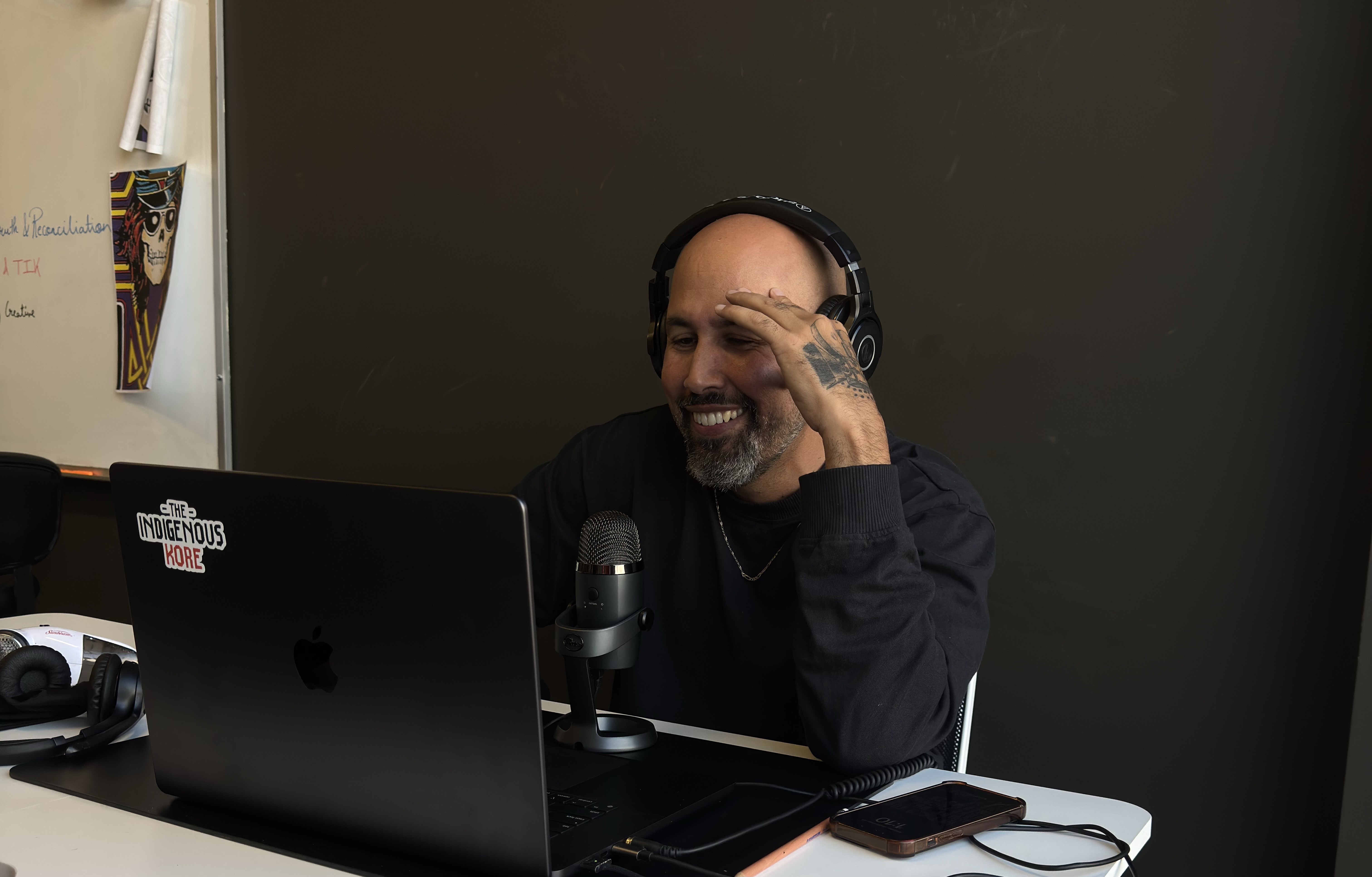
I’m Cliff Skelliter. Some people know me as Cliffnotes. If you work with me long enough, or even just grab a coffee with me in Northern Ontario, you’ll hear me say this until I’m blue in the face:
Most people don’t actually know what a brand is.
They think they do. They use the word confidently in boardrooms and Zoom calls. But the second you ask them to define it without using the word "logo," the room goes quiet. Things get fuzzy, fast.
Let’s fix that. Because once you understand the surgical difference between Brand and Brand Identity, you’ll stop seeing "pretty pictures" and start seeing Strategic Infrastructure. You'll be able to explain it to your CEO, your clients, or your smarty pants friends without sounding like you just Googled a marketing blog five minutes ago.
The 60-Second Definition
A lot of people say: “Brand is a feeling.” That’s not wrong. It’s just incomplete. It’s a bit too "marketing-fluff" for me.
Here is the Sky Story definition:
A Brand is the meaning people assign to you. A Brand Identity is the system of signals you use to command that meaning.
One is the Reputation (The Brand). The other is the Evidence (The Identity).
The "Person" Analogy
Think about someone you respect. Not what they’re wearing, who they are. Their values. Their sense of humor. The way they handle a crisis. The way people talk about them when they leave the room. That is their Brand.
Now, look at their boots. Their haircut. The way they shake your hand. The specific tone of voice they use when they’re making a point. That is their Brand Identity.
Brand = Style. Brand Identity = The Outfit.
You can buy the same outfit as someone else, but you can’t buy their style. This is why "copycat" companies always fail. They steal the outfit, but they don’t have the soul.
Where This Idea Actually Comes From
This isn’t some new-age LinkedIn trend. The giants understood this decades ago.
David Ogilvy, the father of advertising, called the brand "the intangible sum of a product’s attributes."
Then Marty Neumeier came along and sharpened the blade: “A brand is not what you say it is. It’s what they say it is.”
That line is a gut punch to most business owners. It means you don’t own your brand. Your audience does. You are simply the Lead Architect of their perception. You provide the materials; they build the house in their minds.
The Indigenous Lens: Storytelling as Infrastructure
In my world, operating an Indigenous design agency, we look at this through a lens of Legacy.
For thousands of years, Indigenous cultures haven't relied on "logos." We relied on Identity Systems, beadwork patterns, song structures, and oral traditions - to signal Brand Values like community, resilience, and connection to the land.
When you look at a piece of traditional art, you aren't just looking at "graphic design." You are looking at a Signal that tells you exactly who that person is and what they stand for.
Modern business is just catching up to what we’ve known forever: Identity is a tool for survival and recognition.
10 Overlooked Elements of Brand Identity (The "Pro" Level)
Everyone talks about logos and hex codes. If you want to play at a high level, you have to look at the signals everyone else is ignoring.
- Sound Design (Audio Identity): The Netflix "Ta-dum." The Intel chime. If I mute your brand, does it still have a heartbeat?
- Motion & Transitions: Does your website "snap" into place with authority, or does it "glide" with elegance? Motion is personality in real-time.
- Pacing: How fast do you communicate? High-end luxury brands take their time. Discount brands scream at you quickly.
- Interaction Behavior: How does your app feel when a user makes a mistake? Is the "Error" message cold and corporate, or helpful and human?
- Environmental Presence: How does your brand "show up" in a physical office or a community hall? Is it intimidating or inviting?
- Photography Style: Not just "stock photos." Are your images warm? Gritty? Do they feature real people from the community or polished models?
- Language Rhythm: Do you use short, punchy sentences (like this)? Or long, academic prose? Your rhythm is your "accent."
- Silence & Restraint: What you choose not to say. Sometimes the most powerful brand signal is a blank space on a page.
- Microcopy: The tiny text on your "Submit" buttons. "Join the Movement" feels a lot different than "Register Now."
- Consistency Over Time: This is the boring one that matters most. Repetition isn't annoying; it's Training. You are training people's brains to recognize you.
The Ultimate Stress Test
If you want to know if you actually have a Brand or just a Logo, try this:
Remove the logo from your website, your ads, and your packaging. Would your customers still know it was you?
- If the answer is Yes, you’ve built a brand. You’ve created a "Vibe" so strong it doesn't need a nametag.
- If the answer is No, you’re just a commodity with a nice font.
Bringing It All Together
Let’s make this simple enough for you to explain at your next board meeting:
- Brand = The gut feeling they have about you.
- Brand Identity = The visual and sensory tools you use to trigger that feeling.
One is the Mission. The other is the Uniform. You need both. But for the love of all things holy, don't confuse them.
Before You Go
Wherever you are right now, maybe you’re in your truck on the 17, maybe you’re half-scrolling in a meeting that should have been an email, I have one challenge for you:
Share this with one person.
Someone who’s into business, design, or just someone who likes knowing how the world actually works. Because when we all speak the same language, our work gets better. Our communities get stronger. And our "cinematic journeys" actually mean something.
But hey... what do I know. I’m just a guy from Northern Ontario who thinks brand might be the most powerful and misunderstood tool in your arsenal.
.webp)